
INTERNATIONAL ENGINEERING TEAM / SpaceX HYPERLOOP PROJECT

Berkeley Hyperloop

Lightweight Aluminum Chassis Manufacturing & Electric Drivetrain Integration

During my exchange semester at UC Berkeley, I joined Berkeley Hyperloop to help turn an unfinished pod chassis concept into a manufacturable, welded aluminum structure for the 2018 SpaceX Hyperloop competition cycle. My work focused on CAD-to-manufacturing refinement, aluminum chassis fabrication, TIG welding and integration of a four-motor electric drivetrain concept.

SolidWorks · Aluminium 6061-T6 · TIG Welding · Chassis Manufacturing · Electric Drivetrain Integration · Design for Manufacturability

Project Snapshot

ROLE
Structures team member

PERIOD
Feb–May 2018

TEAM
UC Berkeley / Berkeley Hyperloop

COMPETITIONS
Hyperloop Pod Competition 2018

SCOPE
CAD-to-manufacturing refinement, aluminum chassis fabrication, TIG welding and drivetrain mounting integration

BUDGET IMPACT
Reduced chassis fabrication cost from approximately $3,000 USD outsourced to about $800 USD through in-house manufacturing.

INTERNATIONAL ENGINEERING TEAM / SpaceX HYPERLOOP PROJECT

Berkeley Hyperloop

Lightweight Aluminum Chassis Manufacturing & Electric Drivetrain Integration

During my exchange semester at UC Berkeley, I joined Berkeley Hyperloop to help turn an unfinished pod chassis concept into a manufacturable, welded aluminum structure for the 2018 SpaceX Hyperloop competition cycle. My work focused on CAD-to-manufacturing refinement, aluminum chassis fabrication, TIG welding and integration of a four-motor electric drivetrain concept.

SolidWorks · Aluminium 6061-T6 · TIG Welding · Chassis Manufacturing · Electric Drivetrain Integration · Design for Manufacturability

Project Snapshot

ROLE
Structures team member

PERIOD
Feb–May 2018

TEAM
UC Berkeley / Berkeley Hyperloop

COMPETITIONS
Hyperloop Pod Competition 2018

SCOPE
CAD-to-manufacturing refinement, aluminum chassis fabrication, TIG welding and drivetrain mounting integration

BUDGET IMPACT
Reduced chassis fabrication cost from approximately $3,000 USD outsourced to about $800 USD through in-house manufacturing.

01 / OVERVIEW

From exchange semester to international hardware team

From exchange semester to international hardware team

During my exchange semester at the University of California, Berkeley, I joined Berkeley Hyperloop as part of the structures team. It was my first international engineering project and my first experience working in an English-speaking technical team. When I joined, the team was approaching the 2018 SpaceX Hyperloop competition cycle, but the pod chassis was not yet ready for manufacturing or subsystem integration. My role focused on reducing this bottleneck by turning the CAD concept into a manufacturable aluminum structure and physically contributing to the chassis fabrication.

02 / ENGINEERING CHALLENGE

Delivering a lightweight chassis under a tight competition deadline

Delivering a lightweight chassis under a tight competition deadline

The main challenge was time. The competition deadline was approaching, but the team still needed a completed chassis before other subsystems could be integrated. Unlike Baja SAE, this vehicle had no driver, which gave the structure more design freedom. However, the chassis still had to be strong, lightweight and stable for a high-speed straight-line vehicle. A key requirement was integrating a traction concept based on four independent electric motors, one for each wheel, while maintaining precise alignment for the belt-drive transmission.

03 / DESIGN & DRIVETRAIN INTEGRATION

Making the CAD manufacturable and aligning the drivetrain

The chassis was designed in SolidWorks using square aluminum 6061-T6 profiles. My work focused on reviewing and adapting the CAD so the structure could actually be manufactured with the available equipment. The most critical areas were the motor mounting regions, where geometry and precision directly affected belt alignment. Because each wheel had its own electric motor, the chassis had to support accurate drivetrain positioning while keeping the structure simple, lightweight and manufacturable.

04 / MANUFACTURING & WELDING

In-house aluminum fabrication and TIG welding

Manufacturing was the most demanding part of the project. Critical 45-degree cuts for motor-related chassis members were made on a conventional milling machine with an adjustable head angle to improve precision. Less critical aluminum profiles were cut using a precision table saw. I also performed a large part of the aluminum TIG welding, which was the appropriate welding process for the 6061-T6 aluminum chassis. By manufacturing the chassis in-house instead of outsourcing it, the team reduced the fabrication cost from an expected budget of approximately $3,000 to about $800 in material cost.

05 / OUTCOME

Completed chassis for subsystem integration

In approximately four months, we moved from an unfinished chassis concept to a completed aluminum structure ready for subsystem integration. The project required understanding the pod architecture, drivetrain concept, structural implications and manufacturing constraints quickly enough to support the competition timeline. My contribution helped relieve the workload from the structures lead, accelerated the CAD-to-hardware transition and enabled the team to continue integrating the remaining vehicle systems before the competition deadline.

In approximately four months, we moved from an unfinished chassis concept to a completed aluminum structure ready for subsystem integration. The project required understanding the pod architecture, drivetrain concept, structural implications and manufacturing constraints quickly enough to support the competition timeline. My contribution helped relieve the workload from the structures lead, accelerated the CAD-to-hardware transition and enabled the team to continue integrating the remaining vehicle systems before the competition deadline.

What this project demonstrates

• International engineering teamwork in English

• CAD-to-manufacturing refinement

• Lightweight aluminum chassis fabrication

• TIG welding of aluminum structures

• Electric drivetrain mounting integration

• Belt-drive alignment considerations

• Design for manufacturability under time pressure

• Cost reduction through in-house manufacturing

• Hands-on ownership from CAD to welded hardware

Image gallery

CAD MODEL

CHASSIS MANUFACTURING

PRECISION FIT

COMPLETED CHASSIS
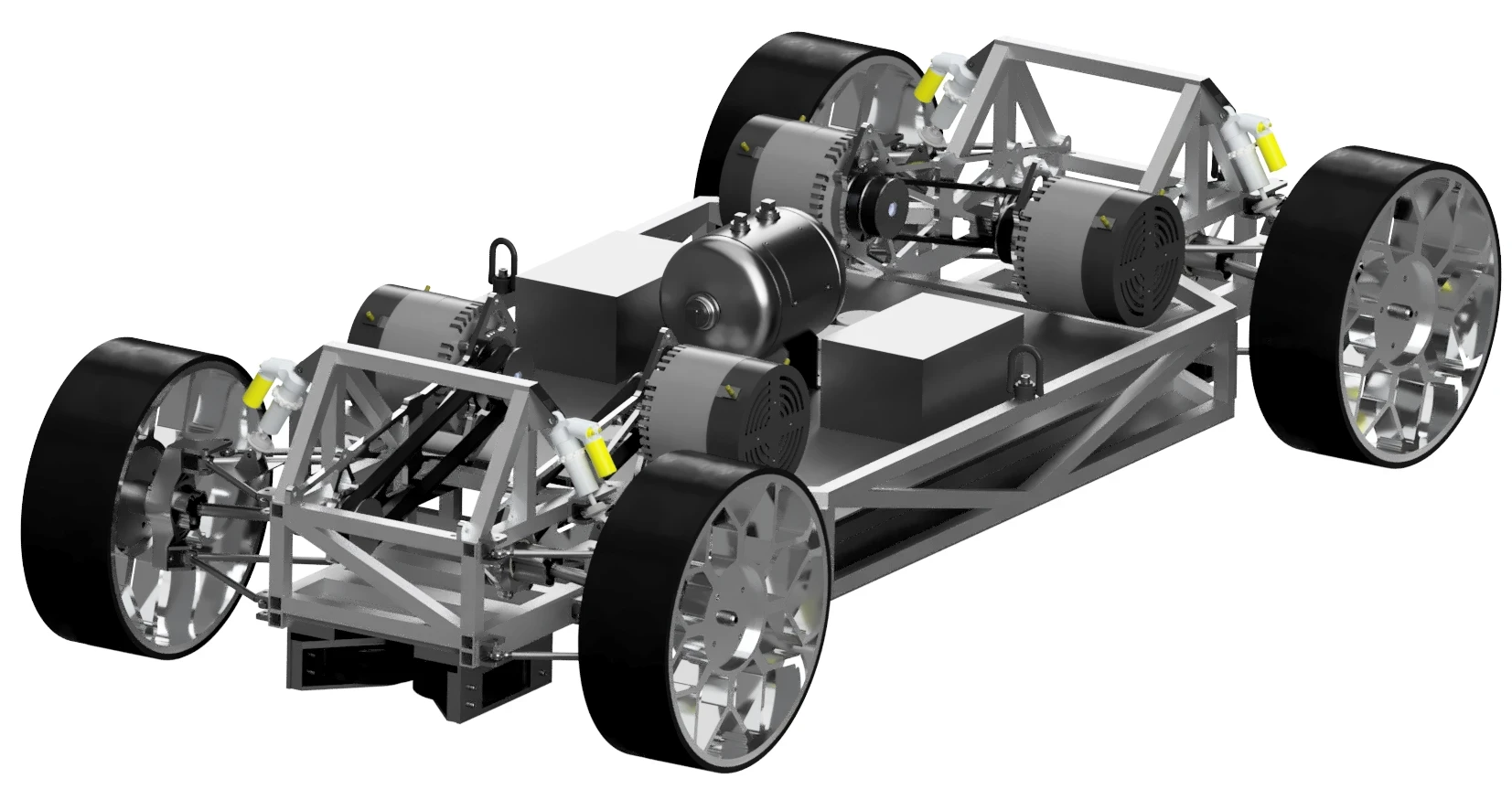
FINAL MODEL